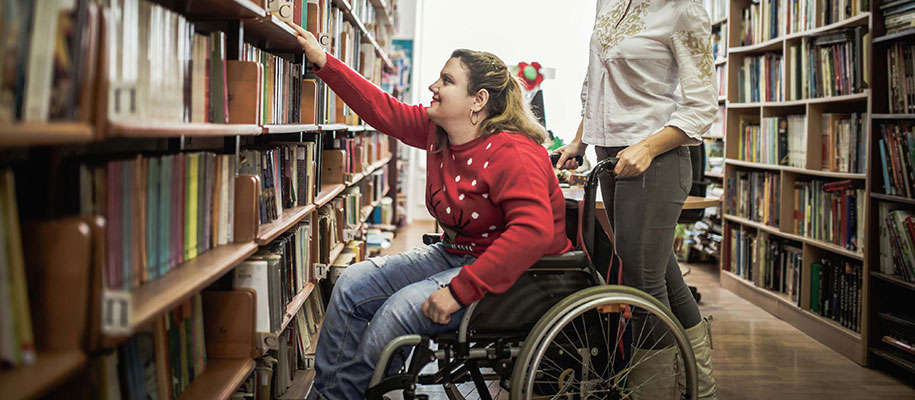
Transitioning to college is a daunting task for anyone. Leaving home, picking a major, finding new friends, and acquiring more freedom is a lot to swallow. If you’re a person with a disability looking for colleges, you’ll be saddled with these responsibilities along with the challenge of managing your condition solo for the first time. These four tips will help you find a school that supports you every step of the way.
Examine your relationship with your disability
Not everyone is comfortable with their disability—and that is perfectly okay. You are entitled to your own opinions, but you should know the symptoms of your condition(s) so you can effectively communicate your needs in your new environment. This may mean initiating a conversation with your parents, medical professional, or disability counselor to understand your weaknesses and put a plan in place if something goes wrong. An important facet of adulthood is owning your identity, disability included. In order to truly feel comfortable in your new environment, you should identify if any of your future schools have counseling services. Having a helping hand to ease the newfound stress will ensure peace of mind.
Related: Top College Search Tips for Students With Learning Differences
Understand the type of schools you’re considering
Previewing the size of the student body and the scope of the campus is a good way to rule out potential colleges. Some students with disabilities prefer a small setting to ensure they (and their accommodations) won’t get lost in the crowd. Other students need a small campus due to mobility issues. And still, others may enroll in a large university hoping to find a supportive community or like the idea of not being the only student with a disability on campus.
When touring a campus, consider how you feel when you finish. Are you invigorated or tired? Do you feel at ease with your surroundings, or are you utterly overwhelmed? Does the campus comply with the Americans with Disabilities Act (ADA)? Do they have wheelchair access ramps or other equipment? Do they allow service animals? Now imagine yourself in these surroundings on a snowy Thursday evening during finals week. Are you still confident in your ability to navigate campus safely? Think about the campus in all conditions and evaluate your comfort level accordingly.
Related: Colleges Where Students With Learning Differences Succeed
Meet with the disability office
When scheduling a campus visit, try to find information about student support services and book an appointment with a counselor. Students should treat this appointment like an interview—you have a right to know how you will be treated for four-plus years. You and your parents should prepare a list of questions to gain as much insight as possible. Ask how many students on campus have a disability or if there are any organizations specifically for students with disabilities. How much experience does the department have treating your condition(s)? Are there appropriate facilities and services available (e.g., tutoring centers, hospitals, note-taking programs, etc.)?
Something else to note is the difference between disability-specific programs and services offered at a college. For example, Gallaudet University, in Washington, DC, is the world’s only university exclusively for the deaf and hard of hearing. Another disability-specific program is the University of Arizona’s Strategic Alternative Learning Technique (SALT) Center, which caters to students with disabilities, making their transition easier. All colleges offer accessibility services to some extent, though some are less comprehensive than others and may require additional fees.
Gather necessary documentation
In high school, educators are required by law to follow a student’s 504 Plan or Individualized Education Program (IEP). Colleges are not required to follow these guidelines. To enroll in a college’s accommodation programs, a student must provide updated documentation. Depending on the disability, functionality reports are performed by a psychologist, or diagnoses are confirmed by a medical professional. Colleges will confirm what documentation students need on a case-by-case basis.
Related: College Search and Scholarship Resources for Students With Learning Disabilities
Finding a dream school for a student with disabilities may take a little extra legwork, but your comfort, in the long run, is worth the struggle. Just remember that there is a school out there for everyone!
Now that you're all prepared, start your college search today on CollegeXpress!