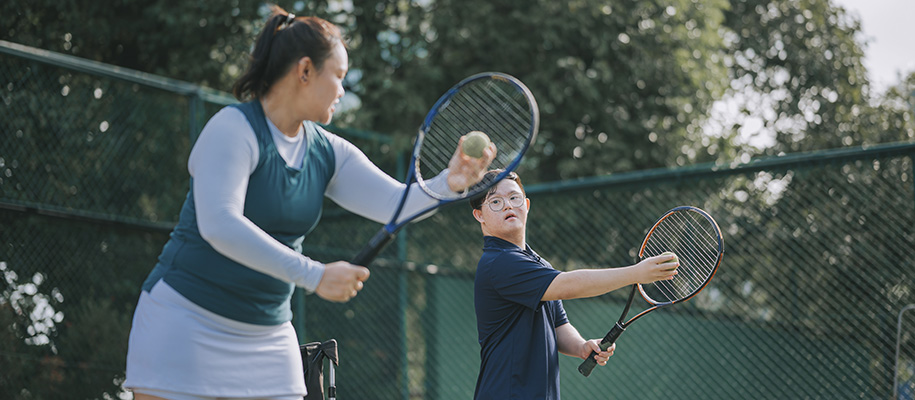
Student-athletes come in all shapes, sizes, and colors. We know this because we see it every time we go to a school sporting event. But what we don’t see, and often don’t know, is that student-athletes also come in all abilities. Many athletes live with what are referred to as invisible or hidden disabilities. These are disabilities that aren’t easily identifiable at first glance, such as autism, deafness, ADHD, and chronic conditions. Compared to Down syndrome, for example, there is no particular “look” to invisible disabilities, and as such, they are harder to identify.
People with invisible disabilities can and do compete in athletic events designed for able-bodied and able-minded people. But accommodations and support are available, and student-athletes shouldn’t feel hindered because of a disability, whether it’s hidden or not. Here’s what students with learning differences should know about playing sports in college and beyond.
Playing your sport in college
In elementary, middle, and high school, intellectually disabled students (usually in special education) are given the opportunity to participate in Special Olympics, an event with an array of sports made accessible to disabled people. There may also be special programs offered by schools to encourage involvement and integration with typical students in general education. However, opportunities like these seem to decrease when these athletes enter college. In college, athletes with disabilities are mostly involved with school-sponsored sports, whether at the varsity, club, or intramural level. The actual number of athletes with disabilities participating in sports is hard to track as disabled athletes often don't self-report their disability due to fear of stigma, and because many athletes with disabilities have not yet been diagnosed. But trust there are far more students like you than you think.
Related: Learning Disabilities in College: 7 Things to Know and Do
Accommodations for student-athletes with disabilities
There are a variety of laws requiring colleges to give necessary and appropriate accommodations to students with disabilities. The most all-encompassing of those laws is the Americans with Disabilities Act (ADA). Passed in 1990, the ADA is a civil rights law that prevents discrimination based on disability. A section of the ADA says that “school, university, and community sports programs all must comply with ADA provisions,” meaning student-athletes with disabilities do have the opportunity to participate in college-level athletics, from recreational to varsity level. For serious student-athletes, the NCAA provides championship opportunities to students with “educating-impacting” disabilities as well as reasonable modifications and accommodations of playing rules that don’t provide unfair advantages in competition.
Finding your best-fit school
There are many colleges that provide opportunities for student-athletes with disabilities and learning differences to compete in their sport of choice at every level. You can start your college search with these lists of schools for Students With Learning and Physical Challenges. Be sure to inquire about any extracurricular opportunities that are specific to and inclusive of disabled athletes at your prospective schools, such as club teams, student groups like the Special Olympics College Club Program, or other athletic events and competitions.
Opportunities beyond campus
To take your play even further, the International Paralympic Games provide physically and mentally disabled athletes the opportunity to showcase their talent to the world. The Paralympics occur every four years alongside the Olympics and, much like their counterpart for people without disabilities, are only available to disabled athletes at the top of their game. One other limit to competing in the Paralympics is age; while requirements differ by country, the minimum age requirement in America is 13. You can check the age requirement for your country on the official Olympics website.
Related: Top Tips to Help Students With Disabilities Find Supportive Colleges
If you’re a student-athlete with a disability, don’t be afraid to pursue your athletic passions in college. Many schools support student-athletes with learning disabilities and physical challenges, as well as accommodations that put everyone on a level playing field. The key is finding a school that will nurture your differences and help you be the best student and athlete you can be. Good luck, and may the best athlete win!
Looking for the perfect school to play your sport that offers the support you need? Check out these College Search and Scholarship Resources for Students With Learning Disabilities.